




Site Logo

Heat Pumps

Technologies

Heat Pumps

Discover the benefits of a heat pump and what to expect from an MCS certified heat pump installation.

Find an installer
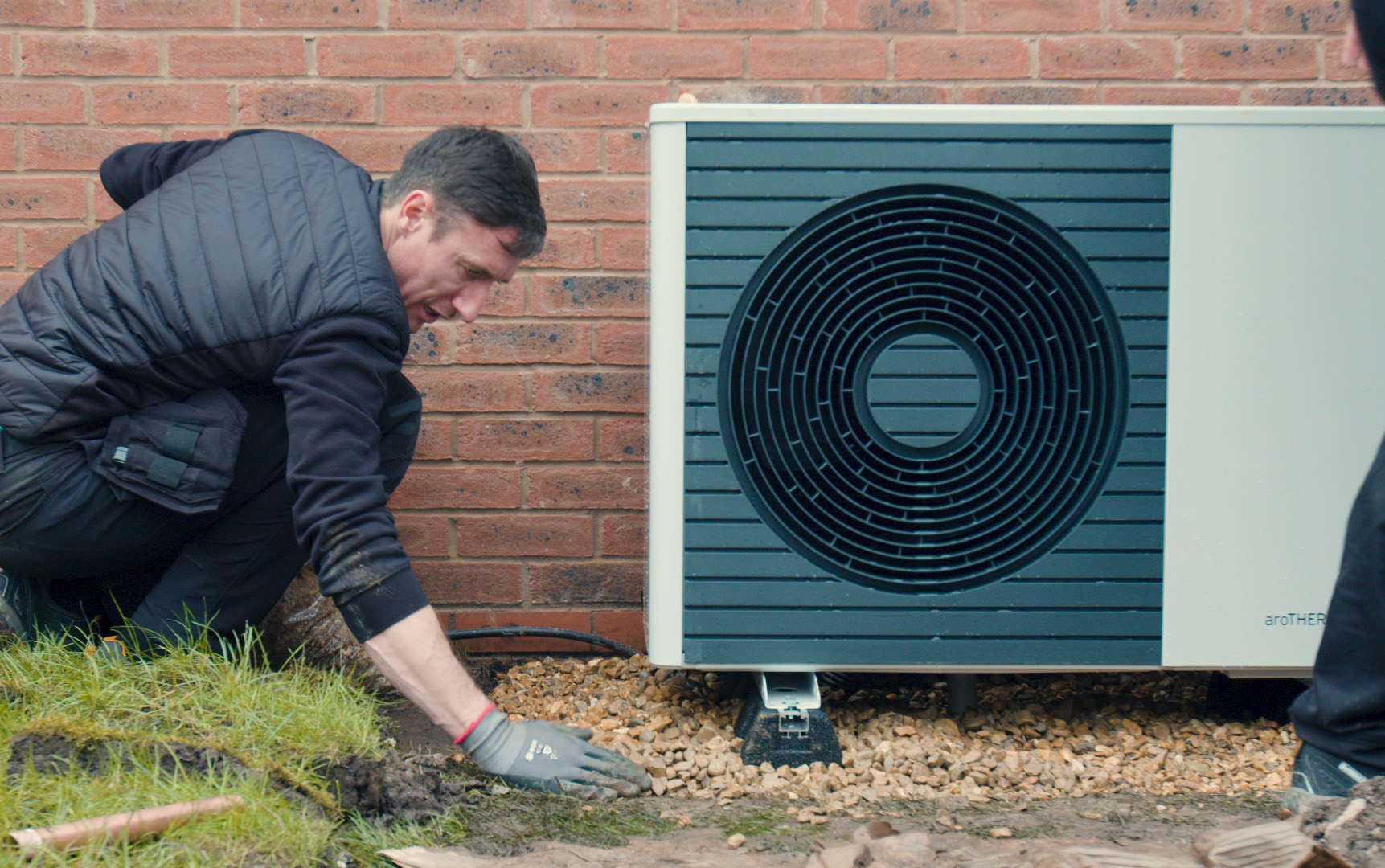
Installer crouched down next to heat pump.

What are heat pumps?

Heat pumps are devices that transfer heat from outside your home into your home using electricity, rather than generating the heat itself.

There are different types of heat pumps you can choose for your home, the most popular we see installed are:

Air Source Heat Pump

Air source heat pumps convert colder air from outside into a higher temperature that you can use to heat your home.

  • Placed on a wall or the ground outside your property, air source heat pumps work like a fridge in reverse. They absorb heat from their source – the outside atmosphere – and transfer it at low temperature to the pump compressor. That heats it up and the condenser transfers it to your heating and hot water. It’s a process that can still generate heat when it’s a nippy -15 outside.
  • All air source heat pumps run on electricity. The good news is that the amount of heat produced by the system is more than the electricity needed to power it. So they’re a good option for anybody with outdoor space looking to improve their energy efficiency.
  • They can also heat your water – as well as your home.

Choose between two options: air or water

  • In an air-to-water pump, the air is converted into water that is then heated, ready for use in your home. The hot water can either be held in a storage tank or in an underfloor heating system. It’s the most common option in the UK.
  • An alternative model is an air-to-air system. These use fans to circulate warm air around your home, and can also offer cooling. They don’t provide hot water.
little boy with bubble ad heat pump

Ground/water source heat pump

An indoor unit that harnesses natural heat from underground or a water source.

  • Ground source heat pumps work by circulating a mix of water and antifreeze around a loop of pipe buried in your garden. The constant low-level heat in the ground warms the fluid in the pipes. This is then condensed by the heat pump to raise its temperature. Piping hot, it’s transferred into your home to provide heat and hot water.
  • Heat naturally moves from warmer to cooler. So, once the energy has been extracted by the heat pump, the fluid returns to the underground pipework to begin absorbing more heat again.
  • The buried pipes are of course plumbed into your property so they can be controlled using a straightforward thermostat and timeclock system.
  • Ground source heat pumps can also be synced up with smart heating controls to create a system that benefits you most.
  • They have the lowest carbon output for any kind of heat pump.

Benefits of heat pumps

Tick icon.

The potential to reduce your heating bills.

Tick icon.

Cut your carbon footprint.

Tick icon.

Low running costs.

Tick icon.

Reduce your reliance on fossil fuels.

Tick icon.

Future-proof your home.

Tick icon.

They come in various sizes and forms to best suit your home and needs.

Costs and considerations

Heat pumps are suitable for almost all types of homes – from one-bedroom flats to large manor homes. Because heat pumps rely on various sources (air, ground, water), they can adapt well to different buildings.

The cost of a heat pump will depend on the size and age of your property, as well as the heat pump type.

An air source heat pump costs, on average, around £13,200 in 2025. For ground/water source heat pumps, the average cost is close to £23,000.

For an air source heat pump, you don’t need a big garden. Most properties have enough space for one, making them a viable option for most people. As of 29 May 2025, changes to Permitted Development Rights (PDR) in England have eased planning restrictions for air source heat pumps.

  • Ground source heat pumps have more considerations:
  • You’ll need a bit of outdoor space. Some installers work this out as somewhere between 50 and 80 metres of pipe per kilowatt. To put that in context, 5kW, 8kW and 12kW systems should cover the demands of any household.
  • Some suppliers quote an overall area of 700 metres. What’s equally important is that your garden is suitable to have trenches dug for installation, and that digging machinery has easy and suitable access.
  • The pipework needed for the heat pump to operate is typically installed in trenches between 1-2m deep, but this can vary depending on the energy requirements.
  • If space is tight then pipes can be put in vertically, but you’ll need specialist machinery, which will increase the cost of installation.
  • The majority of people opt to have the pipework installed horizontally because it’s cheaper – but you will need a large garden.

Speak to an MCS certified heat pump installer and they’ll assess your home and set your heat pump to work with your house type and heating needs.

Why choose an MCS certified installer?

MCS is the UK’s quality mark for small-scale renewables like heat pumps. We set the standards you should always expect from an MCS certified installer.

MCS certification ensures that our installers install renewable technologies to the best possible quality, while also adhering to industry-recognised safety practices when working in and around your home or small business.

Certified installers use MCS certified heat pumps. This means that the product being used has been tested for quality, reliability, and performance.

We encourage you to check an installer’s certification status through our online Find an Installer online search, or by calling our Helpdesk. To ensure that your installer has maintained certification throughout, it’s worth checking as you get a quote, before you sign your contract, and before the installation starts.

Find an installer near you

 If you are ready to explore installing heat pumps in your home or small business, you can find an MCS certified heat pump near you using our ‘Find an Installer’ online search.

Installer smiling at camera.

What to expect from an MCS certified installer

MCS certified installers are expected to operate with integrity and provide high-quality service throughout the customer journey.

This starts with the quote you will be provided for your heat pump, which will be clear and provide a full breakdown of what you’re purchasing. It is the duty of your installer to ensure that you are fully informed of their products and services, the installation timeline, and any delays which may occur – all without using jargon.

Your installer should also tell you about any subcontractors that will be involved in your installation, so you can know who is at your property and when.

Tick icon.

Your heat pump should be working as expected.

Tick icon.

You will receive an MCS certificate within 10 working days of completion.

Tick icon.

You will receive a handover pack upon completion, including key information such as product details and workmanship warranty.

Tick icon.

Your new system will be designed and installed in accordance with MCS Standards.

Living with your heat pump

Heat pumps are more efficient than traditional heating systems. You can combine them with solar panels so the panels power the heat pump itself.

On average, an air source heat pump lasts up to 20 years. To operate it as efficiently as possible, regular maintenance is essential. It’s a good idea to schedule a yearly check-up with a professional. Additionally, if you have any plants growing near the heat pump, make sure to remove them, as they can affect performance.

Ground source heat pumps also require regular, scheduled maintenance, and with proper care, they can last around 20 years. Ground source heat pumps are reliable all year round too, as the ground below a metre deep stays at a consistent temperature. The pipes absorb enough heat even during the winter months, ensuring the pump delivers hot water and heating whenever you need it.
Your MCS installer will provide a simple maintenance guide with instructions for checks to keep everything running smoothly.

Grants & incentives

To make it easier to get a heat pump for your home, there are several schemes – some backed by the government – that can help cover some or all of the installation costs.

The Boiler Upgrade Scheme (BUS)

If you live in England or Wales, the Boiler Upgrade Scheme provides a grant of up to £7,500 to go towards the cost of a heat pump for your home. To be eligible for the grant, your installer must be MCS certified.


ECO4

You may be eligible to have a heat pump installed under the Energy Company Obligation 4 (ECO4), a government-backed scheme designed to tackle fuel poverty and help reduce carbon emissions.

ECO4 places a responsibility on energy suppliers to help households in low income areas heat their homes more efficiently. This can include improving access to heat pumps as a way of reducing energy usage. To be eligible, your installer must be MCS certified.

Local and regional funding

We also encourage you to explore local and regional funding options that may be available based on where you live.

Some examples include:

Hear from other homeowners

Ready lucy's story
heat pumps

Additional resources

MCS works with the wider industry to empower consumers to make the right choice in how they heat their homes. You can access more information about heat pumps here:

Energy Saving Trust

The Energy Saving Trust is the largest provider of energy-saving advice in the UK, helping you to find ways to reduce your carbon emissions and find eligible grants.

The Heat Pump Association (HPA)

The Heat Pump Association (HPA) is a Trade Association that promotes the use and benefits of heat pumps.

Which?

Which?, a non-profit consumer protection advocate, also provides easy-to-use guides for people considering a heat pump for their home.

Go Renewable

Powered by MCS and Energy Saving Trust, Go Renewable is a start-to-end platform allowing you to assess your home for your next renewable upgrade, book a professional home survey, and compare quotes from MCS certified installers ready to install your chosen renewable technology.